
The Nigerian Installment Economy: Opportunities and Challenges in 2026
Nigeria's economy, particularly its informal and semi-formal sectors, thrives on flexible payment options. From real estate in Abuja to solar equipment leasing in Kano, installment sales are a cornerstone of accessibility and market expansion. However, this growth comes with inherent operational challenges. A report by the National Bureau of Statistics in 2025 highlighted that small and medium-sized enterprises (SMEs) struggle significantly with cash flow management, with delayed payments being a primary culprit. Businesses offering credit or installment plans often face a delicate balance: extending credit to boost sales while simultaneously battling the administrative burden and financial risk of payment collection. The sheer volume of transactions, coupled with the need for personalized customer follow-ups and accurate record-keeping, can quickly overwhelm traditional, manual systems. This is particularly true for sectors like building material suppliers selling on credit, where numerous small, frequent payments are the norm.
What You Need Before You Start
Before diving into automating your installment payment process, gather these essential components:
Clearly Defined Payment Terms: Standardized policies for down payments, installment amounts, due dates, late fees, and grace periods.
Customer Contact Information: Up-to-date phone numbers (especially WhatsApp numbers) and email addresses for all clients.
Contract Templates: Digital versions of your sales agreements or legal contracts.
Asset Inventory (if applicable): A detailed list of all items sold on installment (e.g., property units, vehicle VINs, equipment serial numbers).
Designated Staff: Identify who will manage the system and handle exceptions.
Budget for Automation Tools: Allocate resources for a reliable contract management software Nigeria solution.
Company Branding Assets: Your logo, preferred colors, and digital signature for professional communication.
Step-by-Step: Automate Installment Payments & Never Chase a Customer Again
Automating your installment payment process transforms a reactive, time-consuming task into a proactive, streamlined operation. Follow these steps to implement an efficient system that ensures timely payments and reduces administrative overhead.
Step 1: Standardize Your Contract Terms and Client Onboarding
The foundation of automation is consistency. Before any system can take over, your payment terms must be clear, legally sound, and uniformly applied. This includes defining down payments, installment frequency (weekly, monthly, quarterly), due dates, grace periods, and penalties for late payments. For new clients, streamline the collection of their personal and contact details, ensuring accuracy from the outset. This initial data entry is critical for the automated system to function correctly.
Once terms are standardized, focus on efficient client registration. This involves capturing comprehensive client details and linking them to specific assets or services they are acquiring. For instance, real estate developers need to associate a client with a specific property unit, while car dealers on hire purchase need to link a client to a particular vehicle.
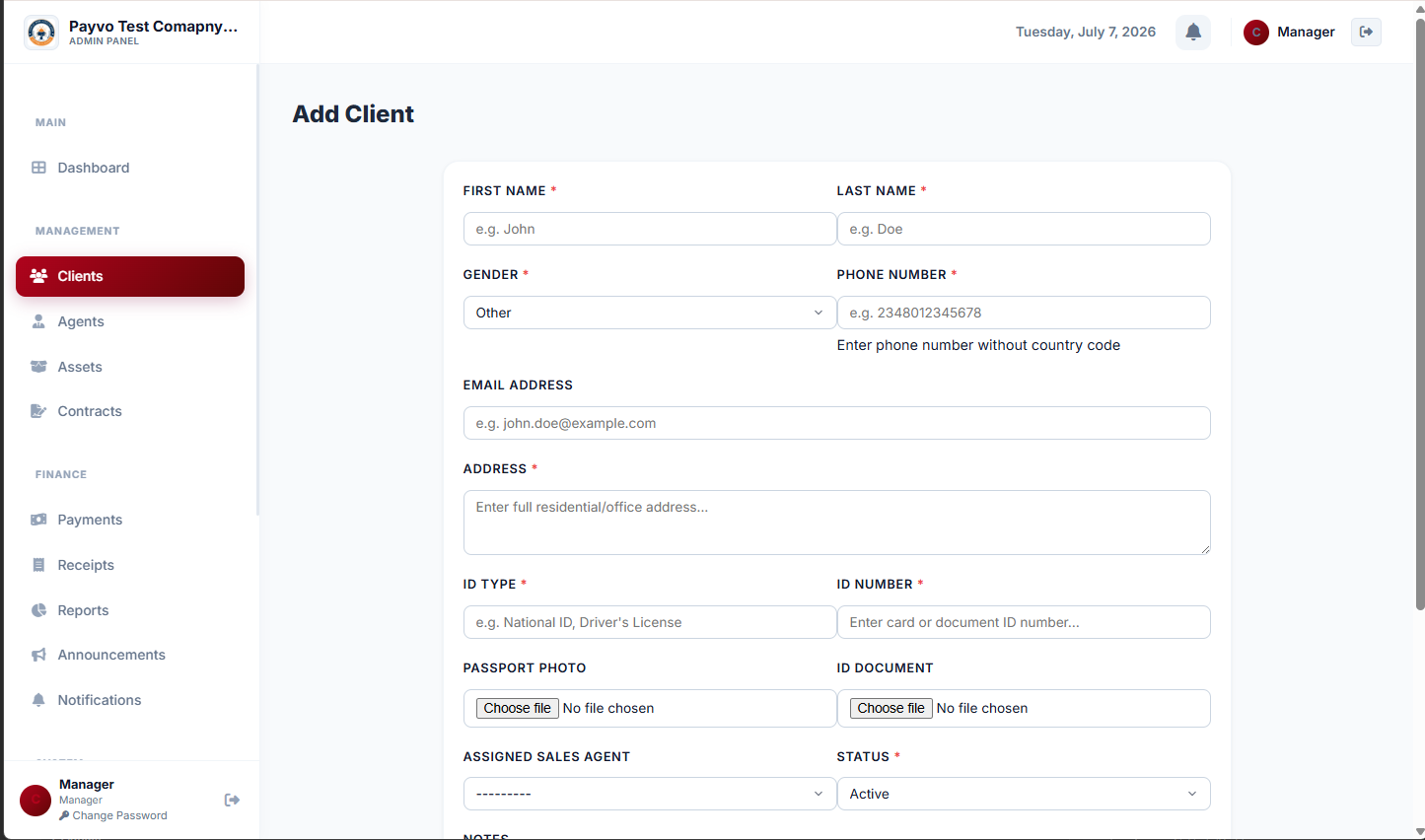 Client: Add Client page
Step 2: Digitize Your Asset and Contract Management
Manual tracking of assets and contracts is a common bottleneck for businesses, especially those managing a large inventory like solar equipment leasing companies. Transitioning to digital asset registration allows you to track every item sold on installment, linking it directly to the customer and their contract. This creates a single source of truth for all transactions. Once assets are registered, the next crucial step is digitizing the contract creation process. This means moving away from paper-based contracts to a system where payment terms, schedules, and client information are entered once and automatically generate the full contract and payment plan.
Imagine having a system that allows you to register and manage all your assets – be it a plot of land, a car, or a solar panel – and then easily associate these assets with individual client contracts. This not only simplifies record-keeping but also enhances transparency. When it comes to contract creation, the ability to set payment terms once and have the installment schedules generated automatically is a game-changer. This eliminates manual calculation errors and ensures consistency across all agreements.
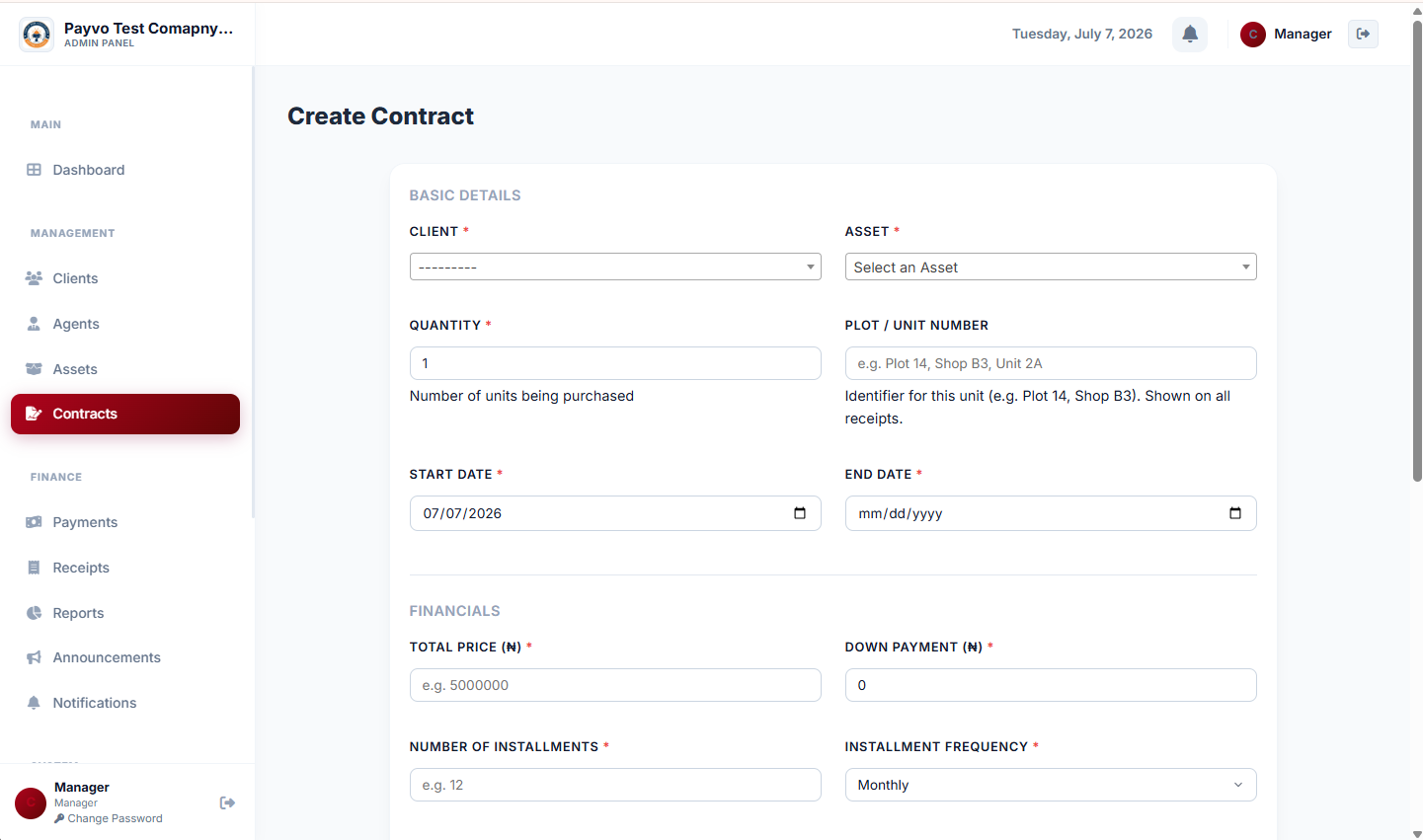 Management: Add contract (top)
Step 3: Implement Automated Payment Scheduling and Reminders
This is where the true power of automation shines. Once a contract is created with its defined payment schedule, the system should automatically track due dates and initiate reminders. Manual follow-up calls are not only time-consuming but can also be inconsistent and sometimes perceived as intrusive. An automated system sends polite, timely reminders via preferred channels like email and WhatsApp, reducing the need for direct intervention. This proactive approach significantly improves collection rates.
A robust installment management software Nigeria solution will handle this seamlessly. It should be capable of sending automated payment reminders before due dates, eliminating the need for manual follow-up calls. Furthermore, it should be able to send automatic notifications for new clients, new contracts, and payment received, keeping all parties informed without extra effort. For businesses like cooperative societies, this ensures that members are always aware of their payment status and upcoming obligations.
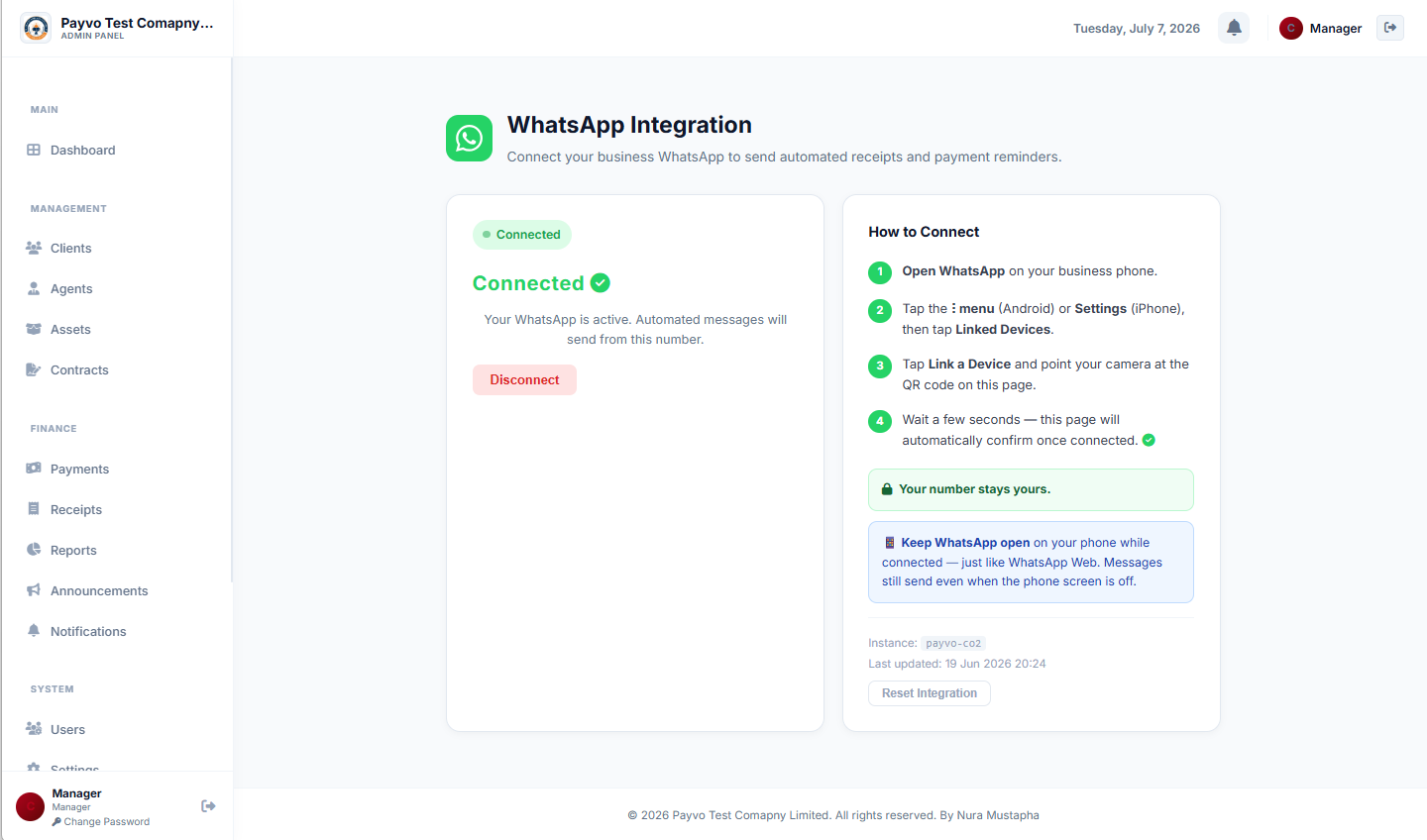 Admin: Whatsapp Integration
Step 4: Streamline Payment Recording and Receipt Generation
Recording payments accurately and generating receipts promptly are critical for customer satisfaction and financial reconciliation. Manual processes are prone to errors and delays, leading to disputes and confusion. An automated system allows for quick logging of payments against specific contracts, instantly updating the client's balance and providing a clear audit trail. Simultaneously, it should automatically generate professional, branded receipts for every transaction, complete with company branding, and make them easily accessible to the client.
This step is vital for maintaining trust and transparency. When a customer makes a payment, they expect immediate confirmation. A receipt generator app Nigeria can automatically create branded receipts (with your company logo, colors, and signature) for every payment. These receipts can then be sent automatically via email and WhatsApp, often including a public receipt link clients can view, save, or share, enhancing convenience and reducing administrative tasks.
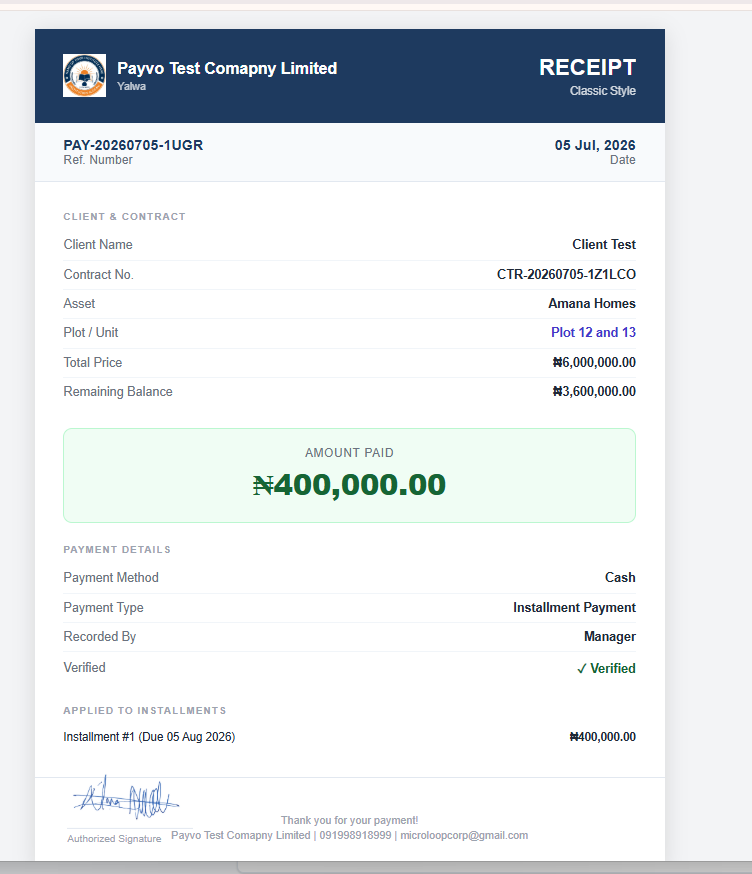 Finance: Paymnet Receipt Sample
Step 5: Empower Your Staff and Agents with Role-Based Access
For businesses with multiple employees or a network of agents, managing access to sensitive client and financial data is paramount. An automated system should allow you to add staff accounts with role-based permissions, ensuring that each person only sees and does what is relevant to their responsibilities. This enhances security and accountability. For businesses relying on agents, such as real estate developers or car dealers, the system should also facilitate agent commission tracking and provide agents with self-tracking capabilities.
This means business owners can add staff with role-based permissions, controlling what each person can see and do within the system. For agent-driven businesses, the ability to assign agents to contracts, automatically calculate commission per payment, and track full earnings and payout history is invaluable. Agents can even log in with a unique code to view their own earnings (KPIs only) and submit withdrawal requests directly, streamlining the entire commission management process. This is a crucial feature for optimizing agent productivity and ensuring fair compensation.
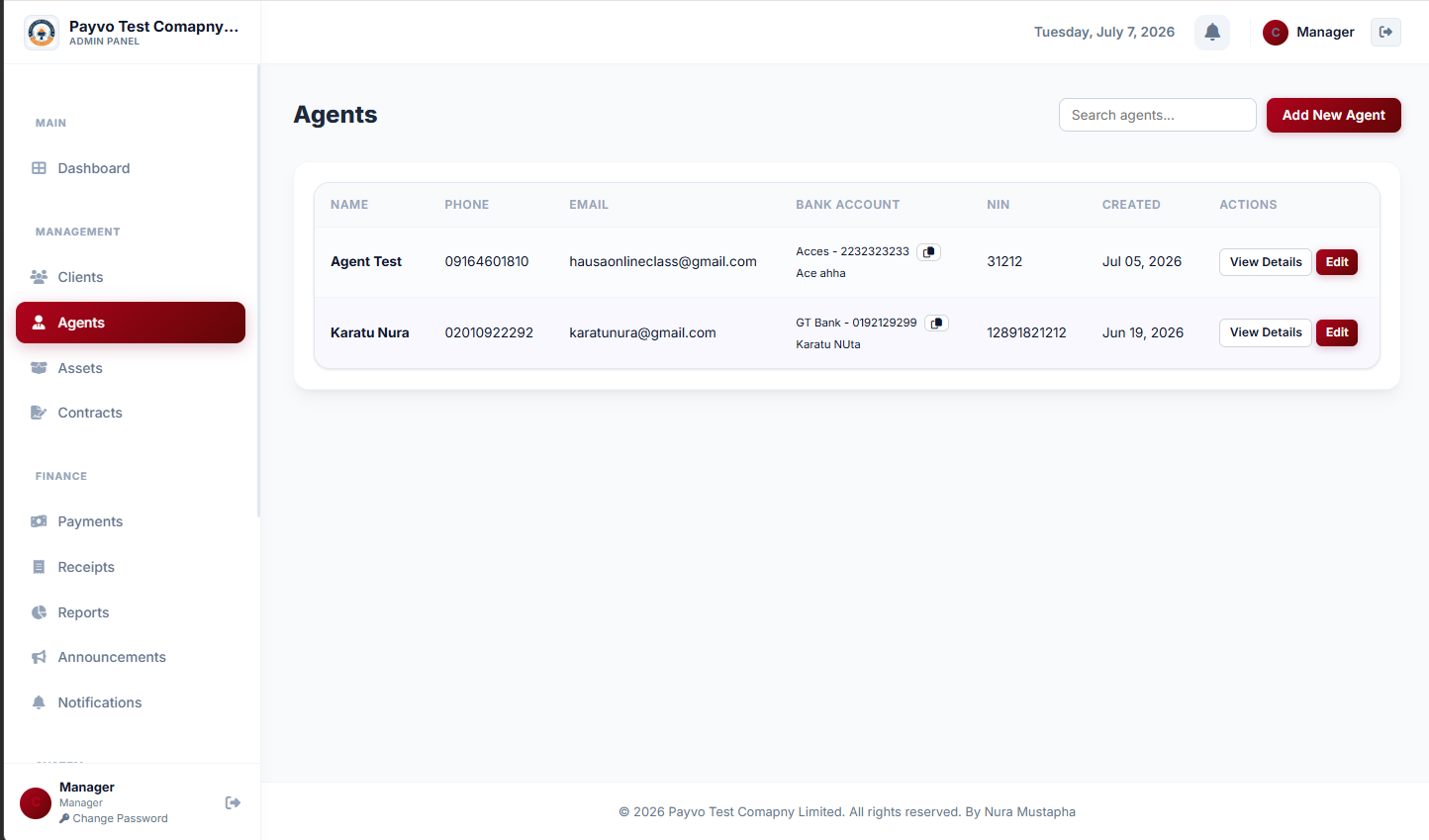 Agent: Agents list page
Step 6: Monitor Performance and Generate Comprehensive Reports
Automation isn't just about doing tasks; it's about providing insights. A robust system offers real-time dashboards that give you an immediate overview of your business's financial health, including total clients, active contracts, amount collected, outstanding balances, and next payment due. Beyond dashboards, the ability to generate detailed reports (PDF or Excel) for accounting, auditing, and strategic planning is essential. These reports provide the data needed to make informed business decisions and identify trends.
This real-time visibility is invaluable for any business. You can view total clients, active contracts, amount collected, outstanding balances, and next payment due at a glance. Furthermore, the system should allow you to generate reports, exporting payment and contract data as PDF or Excel for accounting and record-keeping purposes. Some systems even offer weekly company reports, automatic email summaries sent to company notification emails, covering key business performance metrics. This level of detail is critical for strategic planning and ensuring compliance.
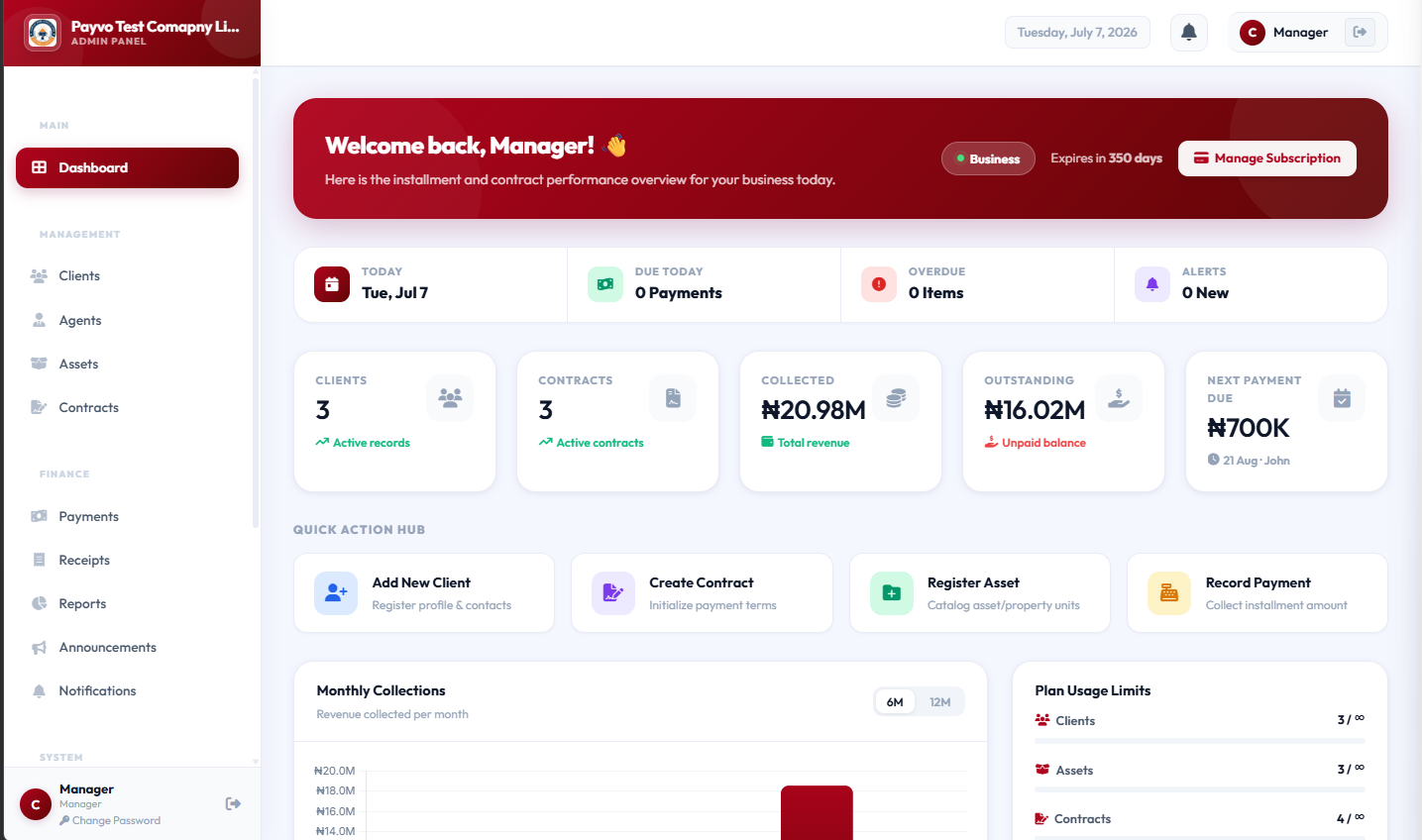 Dashboard (bottom)
> "The manual chasing of installment payments cripples cash flow and consumes resources that could be better spent on growth. Automation isn't a luxury; it's a necessity for sustainable business in the installment economy."
Common Mistakes to Avoid
Incomplete Client Data: Failing to collect accurate and comprehensive client information upfront. This leads to communication breakdowns.
Lack of Clear Payment Policies: Ambiguous terms about due dates, grace periods, and late fees cause disputes and payment delays.
Over-reliance on Manual Overrides: Constantly adjusting automated schedules or sending manual reminders defeats the purpose of automation.
Ignoring System Analytics: Not utilizing the dashboards and reports to understand payment trends and identify issues.
Poor Communication with Clients: Even with automation, failing to educate clients on how the new system works can cause confusion.
Not Training Staff Adequately: Staff members who don't understand the automated system can create more problems than they solve.
 Descriptive Alt Text
How to Track and Grow After Launch
Once your automated installment payment system is live, the work shifts from setup to optimization and growth. Continuous monitoring and strategic adjustments are key to maximizing its benefits.
Monitor Key Performance Indicators (KPIs): Regularly review metrics such as:
Collection Rate: Percentage of due payments successfully collected.
Average Days Delinquent: The average number of days payments are late.
Number of Overdue Accounts: How many clients are currently behind on payments.
Customer Churn Rate (Installments): How many installment contracts are terminated due to non-payment.
Operational Efficiency: Time saved by staff on payment collection and reconciliation.
These insights help you identify bottlenecks and areas for improvement.
Gather Customer Feedback: Proactively solicit feedback from your clients on the new payment process. Are the reminders helpful? Is accessing receipts easy? Use this feedback to fine-tune your communication and system settings. This improves customer experience and reduces payment friction.
Optimize Reminder Schedules: Based on your KPIs and feedback, adjust the timing and frequency of your automated payment reminders. Some clients might respond better to an earlier reminder, while others might prefer a reminder closer to the due date. A sophisticated WhatsApp payment notification system can significantly enhance engagement.
Leverage Reporting for Strategic Decisions: Utilize the comprehensive reports generated by your system to inform business strategy. For example, identify peak collection periods, assess the profitability of different installment plans, or pinpoint specific client segments that require more attention. Export payment and contract data as PDF or Excel for accounting and record-keeping, aiding in compliance and financial planning. For businesses looking for deeper system oversight, audit logs and API access are available.
Expand Agent Tracking and Incentives: If you work with agents, continuously refine your agent commission tracking software. Analyze agent performance data to identify top performers and offer incentives. The ability for agents to self-track their earnings can motivate them further. More details on agent tracking can be found on our agent tracking page.